Safety and Security in Kigo: What Travellers Should Know
A measured, practical guide to safety in Kigo and greater Kampala — what the neighbourhood is actually like, what HMK Living does about security, the precautions that matter on the airport road and in town, and the questions to ask any property before you book.

The honest answer to "is Kampala safe" is that it is a large African capital with the ordinary problems of a large capital, and that the practical risk to a visitor is shaped far more by how they arrive, how they move around and where they sleep than by the city itself.
This guide is written for the traveller who wants specifics rather than reassurance: what Kigo is actually like as a neighbourhood, what the property does, what you should do, and what to ask before you book anywhere in Kampala. It avoids both scaremongering and promises. Nobody can guarantee that nothing will go wrong on a trip — what can be described is practice, and practice is what reduces exposure.
Is Kampala safe for visitors?
Broadly yes, for visitors who take the same precautions they would in any busy capital. The problems that actually affect travellers in Kampala are opportunistic rather than targeted: phone and bag snatching in crowded markets and at stationary traffic, occasional overcharging in informal transport, and the ordinary road risk of a city where motorcycles outnumber taxis.
What that means in practice is that most incidents are avoidable with three habits. Do not display a phone through an open car window in stopped traffic. Do not walk unfamiliar roads after dark, particularly carrying a bag. Do not use transport you have not arranged through someone accountable.
Uganda itself is politically stable day to day, and the tourism sector is well established around gorilla trekking, the Nile and the lake. Visitors are a normal sight rather than a novelty, which cuts both ways: you are not stared at, and you are also not assumed to be lost.
Read the official travel advice from your own government before you fly, because it is updated and this page is not. The useful part of that advice is usually the regional detail — advisories often single out specific border districts far from the capital, which has no bearing on a stay between Kampala and Entebbe.
How safe is Kigo specifically?
Kigo's advantage is structural rather than a matter of policing. It is residential, not commercial; it sits on Kigo Road in Wakiso District on the northern shore of Lake Victoria, roughly 25 minutes from central Kampala; and the plots are set back behind gates and hedges with very little street-level foot traffic.
That removes the two exposures that produce most urban incidents. There are no crowds to be pickpocketed in, and there is no late-night pedestrian route between a bar and your bed, because the neighbourhood has neither the bars nor the pavements of a city centre.
The second structural point is the road. Kigo is about 20 km from Entebbe International Airport via the Entebbe Express Highway, a modern toll road that bypasses the older Entebbe Road and the congestion through the towns along it. A controlled, well-surfaced road with little pedestrian traffic is a materially different arrival from a night run through dense town traffic.
The honest trade-off is the inverse of a central address, and it is covered properly in Kigo against Nakasero. Nakasero is visibly policed because of government buildings and embassies, and it is partly walkable. Kigo is quiet and gated, so its security is a matter of design and staffing rather than visible presence. Neither is better in the abstract; they suit different trips.
What does HMK Living actually do about security?
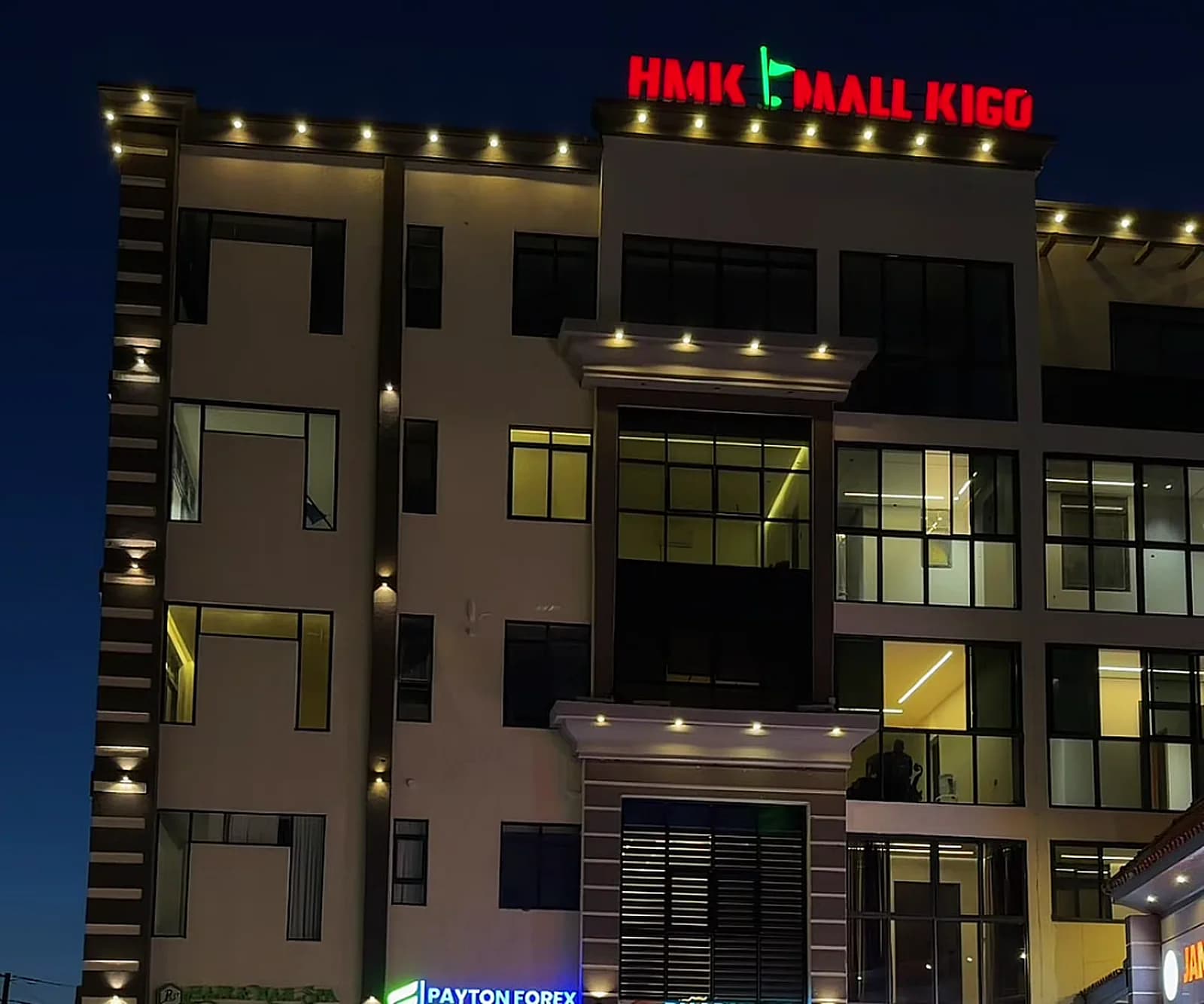
Five things, all of them continuous rather than occasional: 24/7 armed security on site, a gated entrance with controlled vehicle access, gated parking, a 24/7 guest concierge, and airport transfers arranged in-house so the driver who collects you is known.
Taken individually none of these is remarkable. Taken together they close the gaps where things usually go wrong for a traveller — the kerb at the airport, the gate at night, the car park, and the hour when nobody is on the desk.
- Armed security on site around the clock. Not a patrol that visits, and not a camera feed watched from somewhere else. The practical difference is that there is always someone to call from inside the building.
- Controlled vehicle access at a gated entrance. Vehicles are checked in rather than driving straight through, which is the normal standard for serviced buildings in Kampala and the one worth confirming anywhere you book.
- Gated parking. If you are driving yourself or keeping a hired car and driver for the week, the vehicle sits inside the gate rather than on the road.
- A 24/7 guest concierge. This is the part guests underrate. An overnight concierge means a 02:00 arrival, a 04:30 departure for a dawn flight, or a problem at midnight, is handled by someone awake and on duty.
- Transfers arranged by the concierge. You get a named driver and a vehicle rather than a negotiation at the arrivals barrier. Ask on WhatsApp at +256 748 390 401 before you fly.
Two further details are quietly relevant. Payment is settled on arrival rather than by card details handed over weeks in advance, which removes one data-exposure step for cautious travellers. And website bookings carry free cancellation up to 48 hours before check-in, so you are not financially trapped into a trip if circumstances change at home. The current terms sit on the house rules page.
What should you do about the airport transfer?
Arrange it in advance and confirm the driver before you land. The arrivals kerb at any airport is where the most avoidable travel problems start, and Entebbe is no different.
The sequence that works:
- Message the concierge with your flight number, not just your arrival time. Flights into Entebbe shift, and a driver tracking the flight number waits rather than leaves.
- Ask for the driver's name, phone number and vehicle in the same message, and screenshot the reply so you have it without data roaming.
- Clear immigration and baggage before you look for your driver. Uganda requires a visa for most nationalities — apply online in advance rather than relying on arrival processing, and carry a printed copy of the approval and your yellow fever certificate.
- Meet your named driver only. Decline unsolicited offers of transport in the hall and the car park, however helpful they sound.
- Keep bags in the cabin of the vehicle where they fit, and your phone off your lap in traffic.
The drive itself is roughly 20 km on the Entebbe Express Highway. Resist the instinct to measure it in minutes — traffic, weather and the time of day all change it, and the only honest number is the distance. The step-by-step version of this arrival, including what the toll road looks like and where it joins Kigo Road, is in the first-timer's airport guide.
If you are landing late, say so when you book. A late arrival is normal here because the concierge is staffed overnight, but it is easier to arrange before the day than at eleven at night.
What precautions actually matter in town?
Six, and they are all habits rather than equipment. Most visitors who have an uneventful trip to Kampala are doing these without thinking about them.
- Use arranged transport. A driver booked through the concierge, or the chauffeur service attached to the higher activity tiers, rather than a boda-boda hailed on the street. Motorcycle taxis are the single biggest road risk for visitors, and declining them removes it.
- Keep valuables out of sight in traffic. Phones, laptops and handbags on the seat or in the footwell rather than on your lap by an open window. Opportunistic snatching at stopped traffic is the most commonly reported problem in the city.
- Carry a copy, not the original. A photograph or photocopy of your passport and visa for daily use. The original stays in the apartment safe.
- Split your money. Some cash in shillings for markets, boat guides and tips; cards for hotels, restaurants and attractions. Withdraw from ATMs inside bank branches or shopping centres in daylight rather than from street-facing machines at night.
- Be unremarkable in crowded places. Markets, taxi parks and street events are where density creates opportunity. Go with a guide or a driver, take one card and a little cash, and leave the rest behind.
- Walk in daylight, drive after dark. Kigo is quiet enough to walk during the day. After dark, anywhere in greater Kampala, take the car.
One note on photography, which catches visitors out more often than crime does. Do not photograph military installations, police, government buildings or the airport perimeter, and ask before photographing people. This is a rule about causing offence and avoiding an awkward conversation with an official rather than about theft.
Is Kigo safe for solo travellers and women travelling alone?
It is a sensible choice, largely because it removes the moments where solo travel gets uncomfortable: the unknown driver, the unlit walk, and the decision about whether to go out for dinner at all.
The structure of a stay here does most of the work. A named driver collects you from the airport. The entrance is gated with security on site at every hour. Breakfast is included downstairs, lunch and dinner are à la carte in the same restaurant, and room service will bring any dish up to the apartment — so an evening in is a genuine option rather than a compromise.
The precautions that still apply are the ordinary ones, and they are worth stating plainly rather than skipping because the setting is comfortable:
- Share your itinerary and your apartment number with someone at home.
- Lock the apartment door and use the safe for your passport, spare cards and anything you would not want to replace.
- Have the concierge arrange any evening trip out, and agree a collection time rather than finding a ride later.
- Do not post your apartment number, your door or a view that identifies your floor on social media while you are staying.
- Keep the WhatsApp concierge on +256 748 390 401 and the office line on +256 393 101 080 saved in your phone before you arrive.
None of this is unique to Uganda. It is the same list that applies in any city where you do not yet know the street layout.
Is Kigo a good choice for families with children?
Yes, and the reasons are mostly about the building rather than the neighbourhood. A gated entrance with controlled vehicle access, security on site at all hours, no through traffic on the plot, and no swimming pool anywhere on the property — which, for parents of toddlers, removes the hazard they would otherwise spend the week watching.
The apartment format is the other half of it. A 2BHK Suite is from 88 m² with two bedrooms, two bathrooms and a fully stocked kitchen, and the 3BHK Penthouse is from 180 m² on the top floor with three of each. Being able to cook a familiar meal for a child who will not eat anything unfamiliar is a practical form of safety on a long trip.
Be precise about kitchens when you book, because it changes which apartment you need. Full kitchens are in the 2BHK Suite and the Penthouse only; the Studio Deluxe and the 1BHK Suite have a kitchenette with a kettle, a microwave and a fridge, which covers bottles, breakfast and a light supper.
Three further family notes. Bring your own child car seat or ask the concierge well in advance, because availability cannot be assumed. Laundry runs as a service rather than a machine in the apartment, which is what makes travelling light with children workable. And daily housekeeping means the apartment does not accumulate the hazards that a self-catering flat does over a fortnight.
What about health, water and the lake?
Three things to get right: water, mosquitoes and the lake itself. None of them is dramatic, and all three are handled with ordinary preparation.
Water. Drink bottled or filtered water, and use it for ice and for brushing teeth if you are cautious. Tap water is fine for washing. Bottled water is in the apartments and more comes from the restaurant or room service at any hour.
Mosquitoes and malaria. Uganda is a malaria-risk country. Speak to a travel clinic about prophylaxis well before you fly, pack repellent with DEET, and favour long sleeves at dusk, which is when the relevant mosquitoes are active. The lakeside setting is not notably worse than the city for this, but dusk is dusk anywhere.
The lake. Do not swim in open, unmanaged water on Lake Victoria. Bilharzia is carried by freshwater snails in still shallows, and the sensible rule is to stay in the boat or in managed water. Boat operators here provide life jackets — wear one, and accept a postponed departure in bad weather as a sign of a competent operator rather than a spoiled afternoon. Afternoon storms build quickly on this shoreline.
Medical cover. Carry travel insurance that includes medical evacuation, bring your own regular medication in its original packaging with a copy of the prescription, and know that the private hospitals used by visitors are mostly central, roughly 25 to 35 minutes away by road. The concierge keeps the current list and arranges the transport.
Yellow fever. A certificate is required for entry to Uganda. Pack it with your passport, not in your checked bag.

What should you ask any property before you book?
Ten questions, and the speed and specificity of the answers tell you as much as the answers themselves. A property that handles security seriously will answer all of these in one message.
- Is there security on site 24 hours a day, and is it armed?
- Is the entrance gated, and is vehicle access controlled rather than open?
- Is parking inside the gate?
- Is reception or a concierge staffed overnight, or only during office hours?
- Do you arrange airport transfers with your own drivers or a vetted partner, and will you give me the driver's name before I land?
- Does each apartment have its own lock and a safe?
- What is the procedure if I need help at three in the morning?
- Is there a direct number — ideally WhatsApp — that a real person answers?
- How is payment taken, and when?
- What is the cancellation policy?
For reference, the answers at HMK Living are: yes and yes; yes and yes; yes; a 24/7 guest concierge; our own concierge-arranged transfers with the driver confirmed in advance; yes; call the concierge, who is on duty; WhatsApp on +256 748 390 401 and the office line on +256 393 101 080; payment settled on arrival; and free cancellation up to 48 hours before check-in on website bookings.
Ask the same ten of anywhere else you are considering. The exercise is more useful than any star rating, because it tells you how a place runs at the hours when it matters.
What happens if something does go wrong?
You call the concierge first, at any hour, and let them coordinate. That is the whole point of an overnight desk — the person on duty knows which hospital, which police post, which driver and which embassy number applies, and you do not have to work it out in a second language at midnight.
Prepare three things before you travel and the rest becomes administrative rather than frightening:
- Documents. Scans of your passport, visa, insurance policy and yellow fever certificate, stored somewhere you can reach without your phone — an email to yourself works.
- Insurance. A policy with medical evacuation and a 24-hour assistance line, with the policy number saved offline.
- Contacts. Your embassy or high commission in Kampala, your insurer's assistance line, the WhatsApp concierge on +256 748 390 401 and the office line on +256 393 101 080.
For a lost or stolen phone or card, cancel first and report second. For anything medical, call the concierge and your insurer's line in that order. For a lost passport, your embassy will want a police report, which the concierge can help you obtain.
This is the part of trip planning that feels pessimistic and takes twenty minutes. It is also the only part that converts an incident into an inconvenience.
Which apartment suits a security-conscious stay?
Any of them, since the gate, the security on site and the overnight concierge are shared by the whole building. The apartment choice is about space, kitchens and who is with you rather than about safety.
| Apartment | From | Size | Beds and baths | Kitchen |
|---|---|---|---|---|
| Studio Deluxe | $125 | From 32 m² | 1 queen | Kitchenette |
| 1BHK Suite | $140 | From 52 m² | 1 king | Kitchenette |
| 2BHK Suite | $200 | From 88 m² | 2 kings, 2 baths | Fully stocked |
| 3BHK Penthouse | $300 | From 180 m² | 3 kings, 3 baths | Fully stocked |
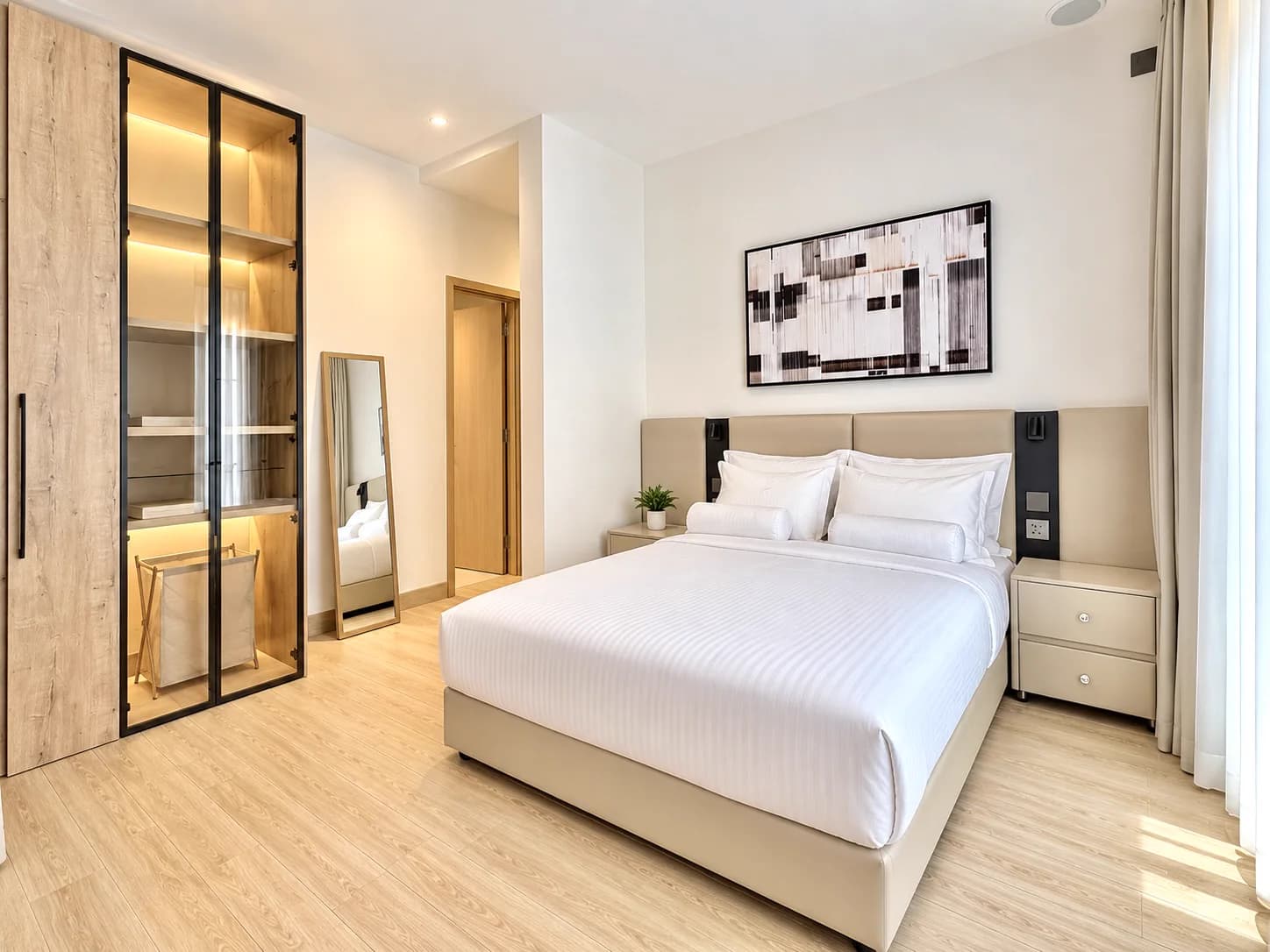
Two patterns are worth naming. Solo travellers and couples who want a controlled stay usually take the Studio Deluxe or the 1BHK Suite and use the restaurant and room service rather than going out every evening. Families and delegations take the 2BHK Suite or the Penthouse, where separate bedrooms, more than one bathroom and a full kitchen reduce the number of daily decisions that involve leaving the building.
Every apartment has fibre-optic mesh Wi-Fi and a work desk, daily housekeeping, laundry as a service and breakfast included. Stays of seven nights or more attract a 10 to 20% discount, which matters for relocators doing a first reconnaissance month. Rates are on the pricing page and what is on site is listed on the facilities page.
The measured summary
Kigo reduces exposure rather than eliminating risk, and that is the only claim worth making about anywhere. The neighbourhood is residential, gated and quiet; the airport road is a modern expressway rather than a night run through town; and the building has armed security on site around the clock with a concierge who is awake at every hour.
What remains is your side of it: arranged transport instead of street rides, valuables out of sight in traffic, documents copied and originals locked away, bottled water, repellent at dusk, a life jacket on the lake, and insurance that covers evacuation. None of it is onerous, and together it is the difference between a trip you remember for the lake and one you remember for the paperwork.
If you are weighing Kigo against a central address, the full comparison is in Kigo against Nakasero, and the neighbourhood itself is mapped on the area guide. The end-to-end picture of staying here is in the complete guide to hotel accommodation in Kigo.
Check your dates and reserve, read the terms on the house rules page, or see the apartments at today's rates on the hotel accommodation in Kigo page. The WhatsApp concierge is on +256 748 390 401 and the office line on +256 393 101 080 — ask them anything on this list before you book rather than after you land.
Reserve your stay at HMK Living, Kigo.
A curated boutique apartment. Direct rates, real-time availability, and an agentic WhatsApp concierge that handles the rest.
Planning a trip? Read our guide to hotel accommodation in Kigo.
The HMK Living editorial team — covering hospitality, travel, and life around Kampala's lakeside. Articles are reviewed by the founding team for accuracy on local detail.
Common questions about this topic.
Kampala is generally straightforward for visitors who take the same precautions they would in any large capital city: use arranged transport rather than hailing rides on the street, keep phones and bags out of sight in traffic, avoid walking unfamiliar roads after dark, and carry a copy of your passport rather than the original. Petty theft and opportunistic phone snatching in crowded areas are the common problems rather than anything directed at visitors. No destination can be guaranteed incident-free, so the sensible framing is reduced exposure rather than zero risk.