A Complete Guide to Luxury Lakeside Living in Uganda
Lake Victoria is the second-largest freshwater lake in the world and Uganda's defining geography. This is the guide to luxury lakeside living along its northern shore — Kigo, Munyonyo, Entebbe — for travellers and long-stay residents alike.

Lake Victoria is the second-largest freshwater lake in the world by surface area and Uganda's defining geographic feature. Its northern shoreline — running from Entebbe through Kigo and Munyonyo and on towards Jinja — is the country's quiet centre of luxury living.
This guide covers the three lakeside clusters that matter, the climate, what daily life on the shoreline actually feels like, and what to check before booking a week or committing to a few months.
Why has Uganda's lakeside become the luxury address?
Because three things changed at once: the road, the internet, and what travellers now want from a luxury stay. For most of the last decade Uganda's hospitality capacity went into central Kampala — Nakasero high-rises, Kololo apartments, Bugolobi business hotels — and the lakeside was a weekend proposition rather than a base.
The first change was infrastructure. The Entebbe Express Highway, opened in 2018, cut the run between the city and the shoreline from something near an hour to a predictable 25 to 30 minutes, and it made the airport reachable without allowing for Kampala's traffic at all.
The second was connectivity. What was once a thin-signal stretch of shoreline now carries fibre, and in Kigo and Munyonyo the speeds are competitive with the city centre rather than an apology for being out of town.
The third is a shift in taste. Executive travellers increasingly measure a stay by whether they can work, sleep and eat well in the same place for two weeks, not by the address on the letterhead. That favours serviced apartments on quiet ground over trophy hotels in traffic.
What are the three lakeside clusters, and who does each one suit?
Greater Kampala's shoreline divides cleanly into Munyonyo, Kigo and Entebbe, in that order as you drive from the city towards the airport. They differ less in quality than in purpose.
Munyonyo
The most mature of the three, and the closest to central Kampala. It is built around large resort hospitality, conferencing and events, and the marina there is the launch point for most lake boat operations.
Munyonyo suits: large weddings and corporate events, conference delegations, and travellers who want a well-developed resort with plenty of movement through it.
Kigo
The newest and most boutique-leaning cluster, sitting in Wakiso District on Kigo Road between Munyonyo and Entebbe. It is anchored by the Lake Victoria championship golf resort, with a Wellness Sanctuary spa and HMK Living alongside it, and most of its inventory has been built or comprehensively refurbished since 2015.
Kigo suits: quiet-luxury travellers, golf-focused stays, executives on remote-work trips, and families or groups who want a Penthouse rather than a corridor of rooms.
Entebbe
Closest to the international airport, and the most transit-oriented of the three. The protected bay shoreline, the Botanical Gardens and the lake frontage there make it a genuine destination, but many visitors use it for a single night either side of a longer Ugandan trip.
Entebbe suits: travellers taking one lakeside night in transit, birdwatchers and botanists, and guests who want the least possible road time from the airport.
| Cluster | To central Kampala | To Entebbe airport | Character |
|---|---|---|---|
| Munyonyo | Shortest | Longest | Large resorts, events, marina |
| Kigo | About 25 minutes | About 20 km | Boutique, golf, residential calm |
| Entebbe | Longest | Shortest | Gardens, bay, transit nights |
Kigo wins on balance for anyone who needs both ends of the shoreline. You are near enough to the city for a morning meeting and near enough to the airport that an evening flight does not eat the afternoon.
What is the climate like on the Ugandan lakeside?
Mild, humid and unusually consistent. Uganda sits on the equator but at altitude — Kampala is around 1,200 m above sea level — and the lake moderates what is left, so the shoreline runs to the same handful of degrees all year.
- Daytime temperatures: 24 to 28°C across the year
- Night-time temperatures: 16 to 19°C
- Rainy seasons: March to May and September to November, in short heavy showers
- Dry seasons: December to February and June to August
- Humidity: higher than inland Kampala, tempered by the breeze off the water
There is no European winter to plan around and no Gulf summer to hide from. That consistency is the lakeside's most underrated luxury: you pack the same bag in February as in August, and a light rain shell covers the difference.
The one thing the numbers understate is the sun. On the equator it sits directly overhead at midday and burns faster than a pleasant 26°C suggests, which is why hats and high-factor sunscreen matter more here than the temperature implies.
Can you swim in Lake Victoria, and what else is there to do on the water?
Swim only in designated, managed water. Open-water swimming off an unmanaged shoreline carries a real risk of bilharzia, a parasitic infection carried by freshwater snails in still water, and it is not worth the photograph.
HMK Living has no pool. Guests who want water time either use the managed facilities at the golf resort next door or, better, get out onto the lake itself, which is where the shoreline is at its most convincing.
Four ways to be on the water, all bookable through the concierge on WhatsApp:
- Sunset cruises. Boats leave from Munyonyo, ten minutes from Kigo by road, and run for about an hour. The simplest good evening on this shoreline.
- Fishing charters. Lake Victoria's Nile perch are the draw, with tilapia the more reliable catch. Half-day charters launch from Munyonyo and the resort jetty.
- Ngamba Island Chimpanzee Sanctuary. Around 45 minutes by boat to an island where rescued chimpanzees live in semi-wild conditions. Visits are capped, so book at least 48 hours ahead.
- Mabamba Bay. A drive plus a small boat through papyrus reeds for the shoebill stork. Dawn start, guide essential.
A practical caution: the lake is large enough to generate its own weather, and storms build quickly in the afternoon. Use a reputable operator and treat a cancelled departure as good judgement rather than bad luck.
What does lakeside living actually feel like day to day?
Slower, quieter and more legible than a city-centre stay. The difference shows up in four senses rather than on a list of amenities.
The light. Lake-reflected light in the early morning and at sunset is the defining visual quality of the shoreline, and it is the reason west-facing terraces command a premium here. It is also why the day has a shape: things happen early, then late.
The sound. Less traffic, more birdsong, fish eagles overhead as a daily presence. The occasional generator is the honest exception — Uganda's grid is good but not perfect.
The pace. A lakeside dinner is ninety minutes, not forty-five. A balcony coffee is an actual coffee rather than something drunk on the way to somewhere.
The company. Diplomatic missions, expatriate consultants and established Ugandan families make the shoreline more settled and less transient than central Kampala. Stays of several weeks are ordinary here, not unusual.
This is geography built to be inhabited rather than visited, which is why the most interesting new inventory on the Ugandan lakeside is serviced apartments rather than hotel rooms. A hotel room is designed for three nights. An apartment with a desk, a kitchen and laundry as a service is designed for three weeks.
Which apartment format fits which kind of lakeside stay?
Match the apartment to the length of the stay and the number of people, not to the budget. The four formats at HMK Living are deliberately different animals rather than four sizes of the same thing.
| Apartment | From | Size | Beds and baths | Kitchen | Best for |
|---|---|---|---|---|---|
| Studio Deluxe | $105 | From 32 m² | 1 queen | Kitchenette | Solo stays, short trips |
| 1BHK Suite | $115 | From 52 m² | 1 king | Kitchenette | Couples, remote work |
| 2BHK Suite | $200 | From 88 m² | 2 kings, 2 baths | Fully stocked | Families, long stays |
| 3BHK Penthouse | $300 | From 180 m² | 3 kings, 3 baths | Fully stocked | Groups, hosting |
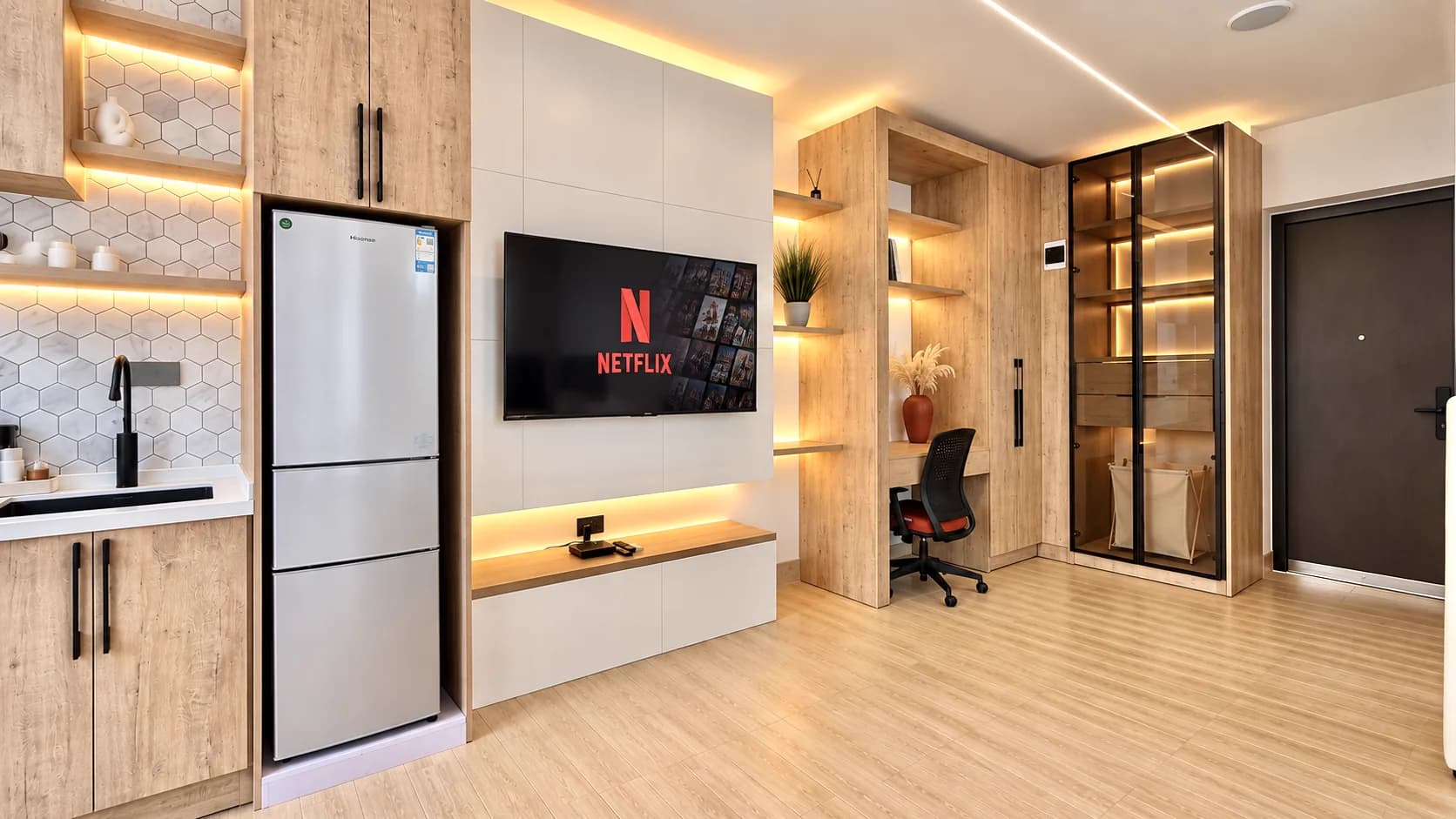
The kitchen line is the one to read twice. The Studio Deluxe and the 1BHK Suite have a kitchenette — kettle, microwave, fridge — which covers coffee, breakfast outside restaurant hours and a cold drink at the end of the day. A fully stocked kitchen, where you can actually cook for four, comes with the 2BHK Suite and the Penthouse.
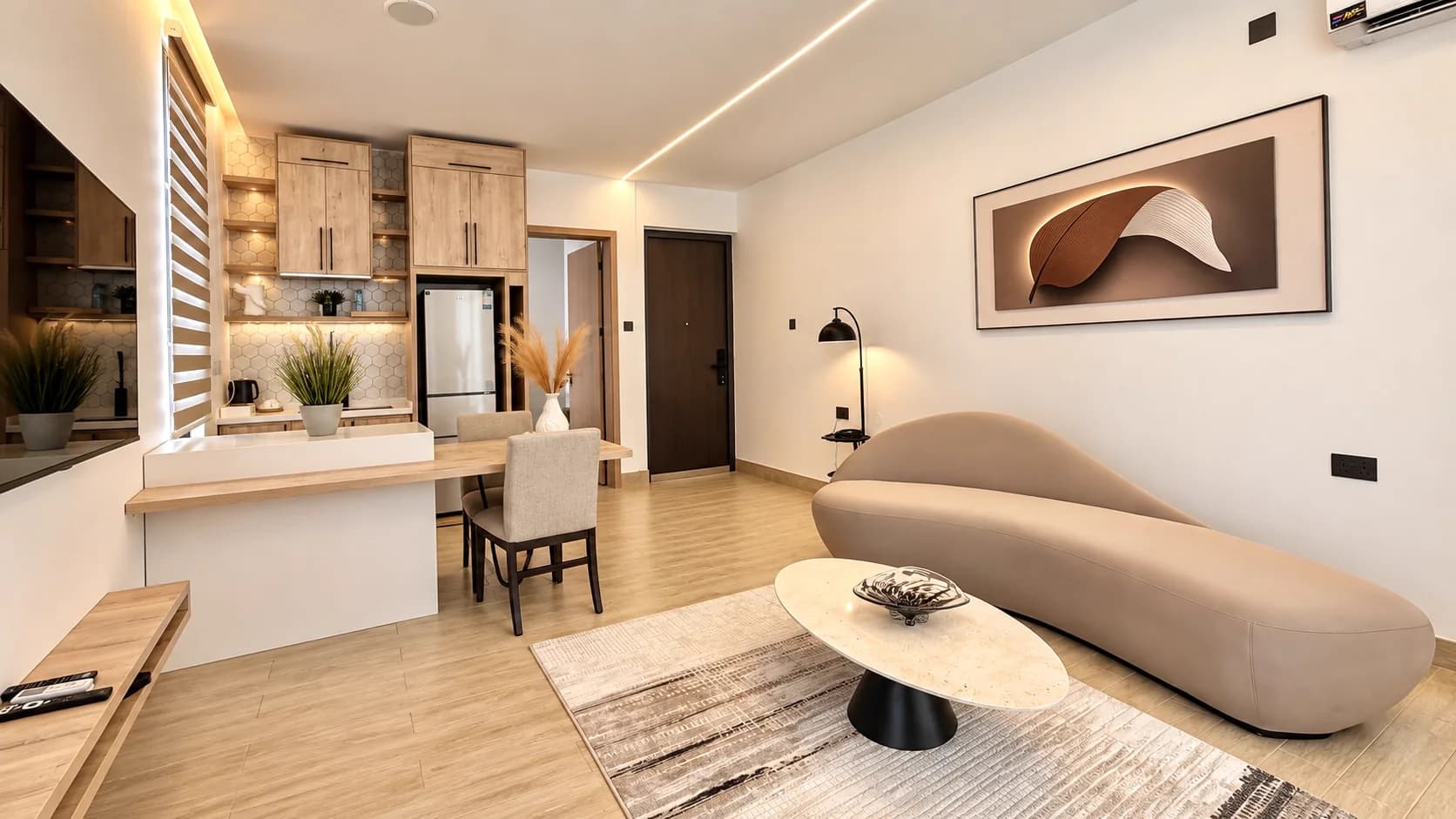
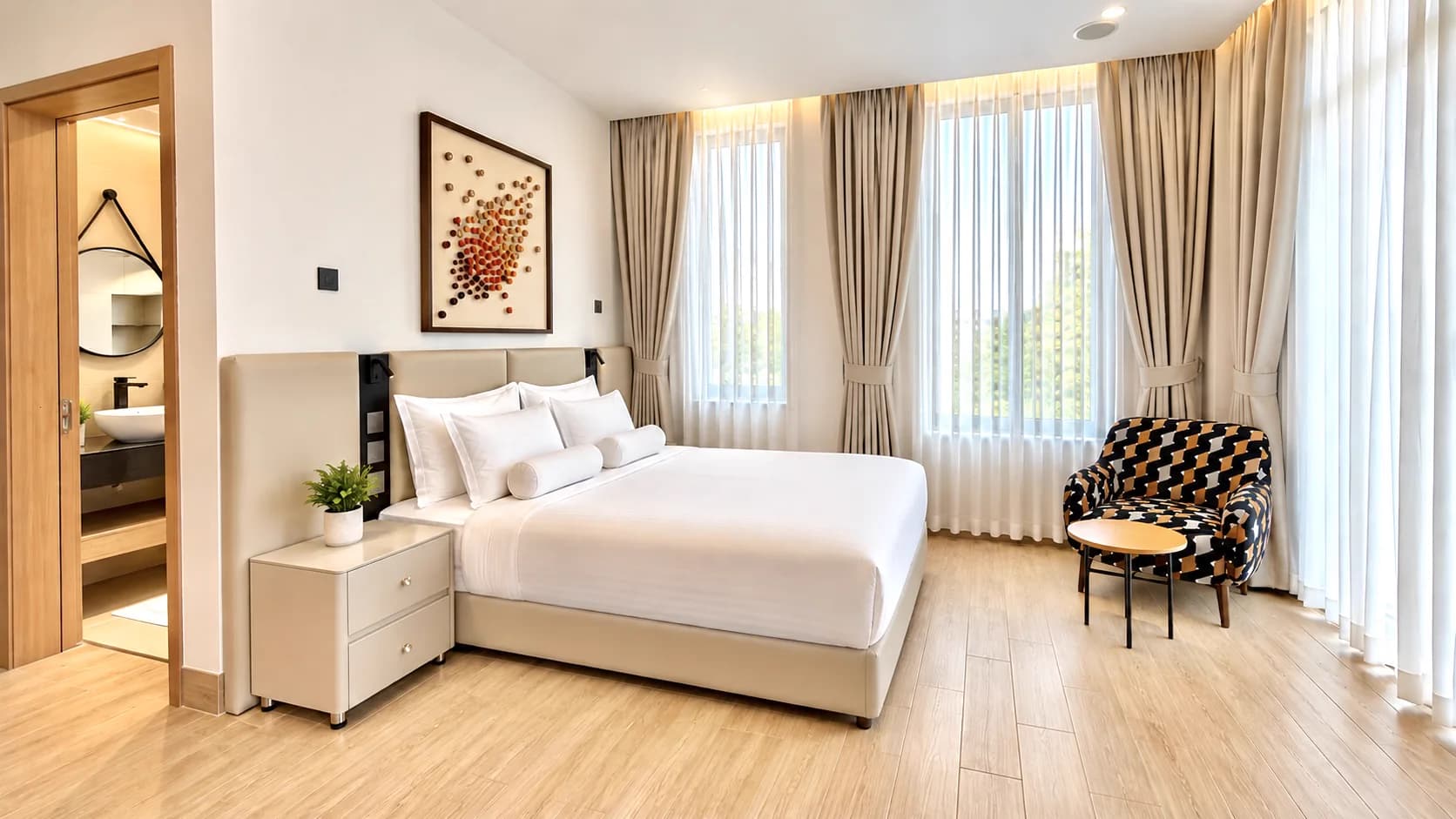
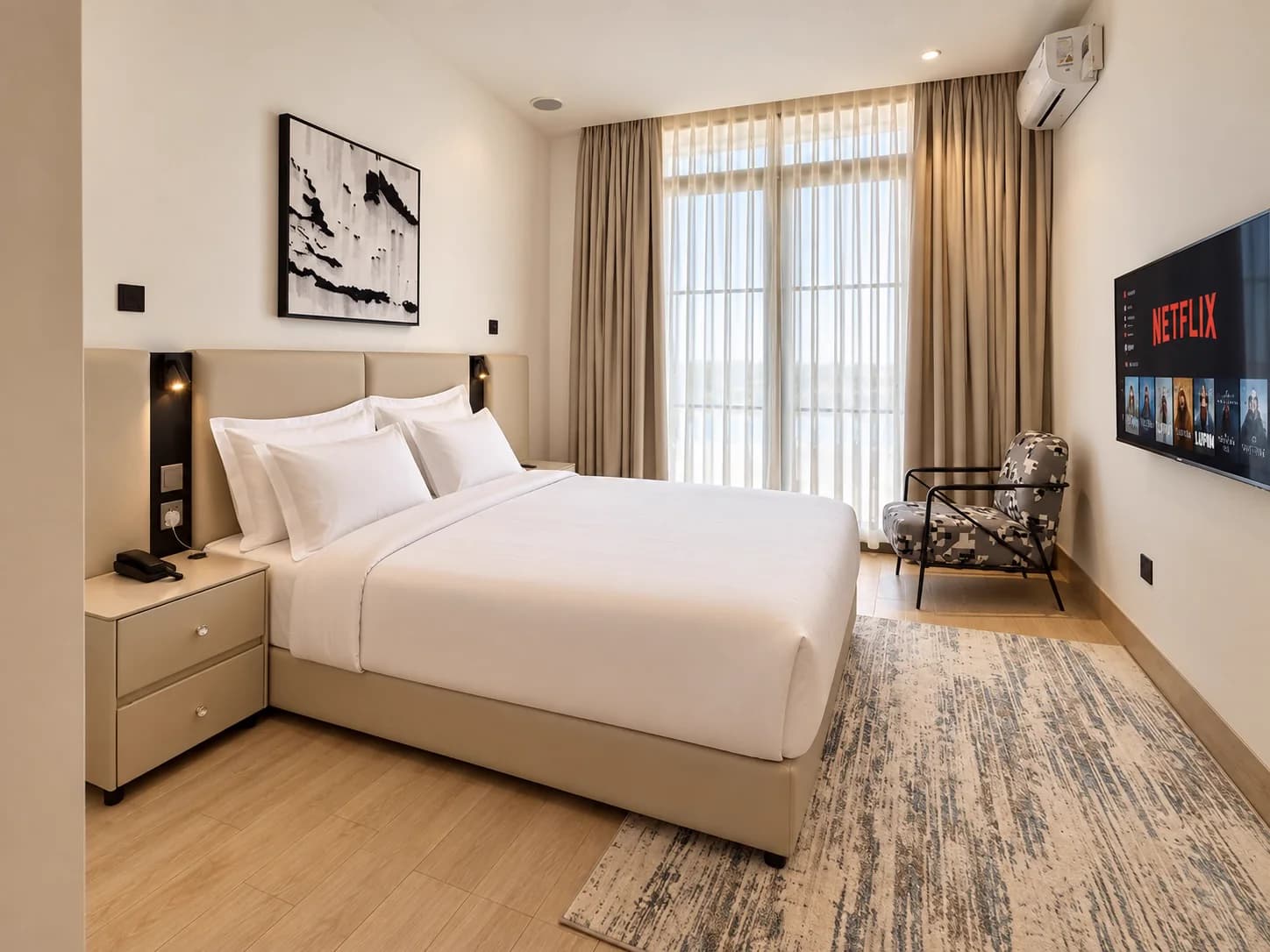
What every apartment shares is the infrastructure that makes a long stay work: fibre-optic mesh Wi-Fi throughout the building, a work desk, a 55-inch QLED television, premium linen, daily housekeeping, laundry as a service, 24/7 armed security on site and a 24/7 concierge. Breakfast is included with every stay. There are no washing machines in the apartments by design — laundry goes out and comes back folded.
How do you eat well on the lakeside?
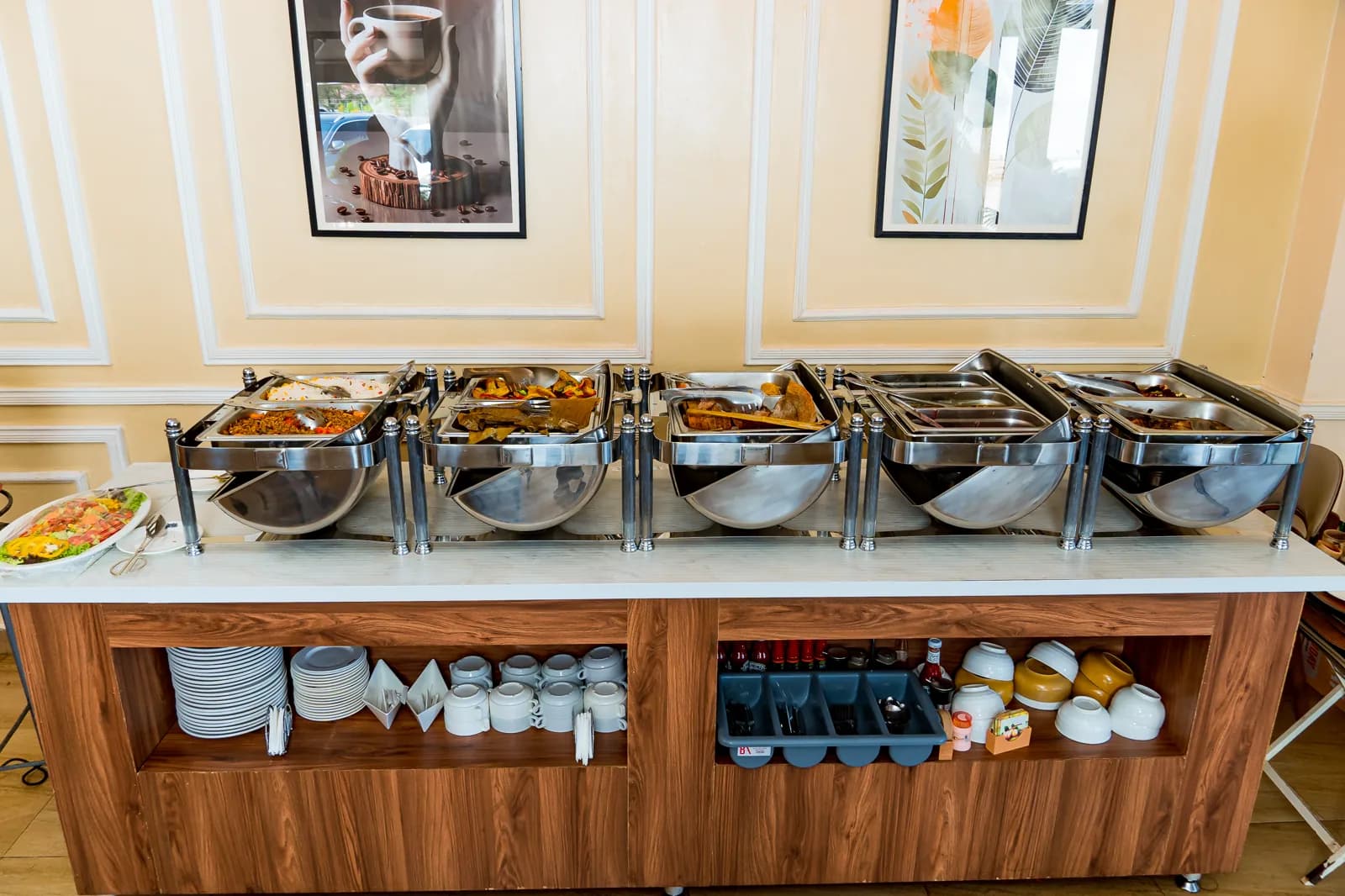
Breakfast is included with every stay and served in the ground-floor restaurant, which solves the first meal of the day permanently. That matters more on the shoreline than it would in town, because Kigo is residential and there is no café three doors down.
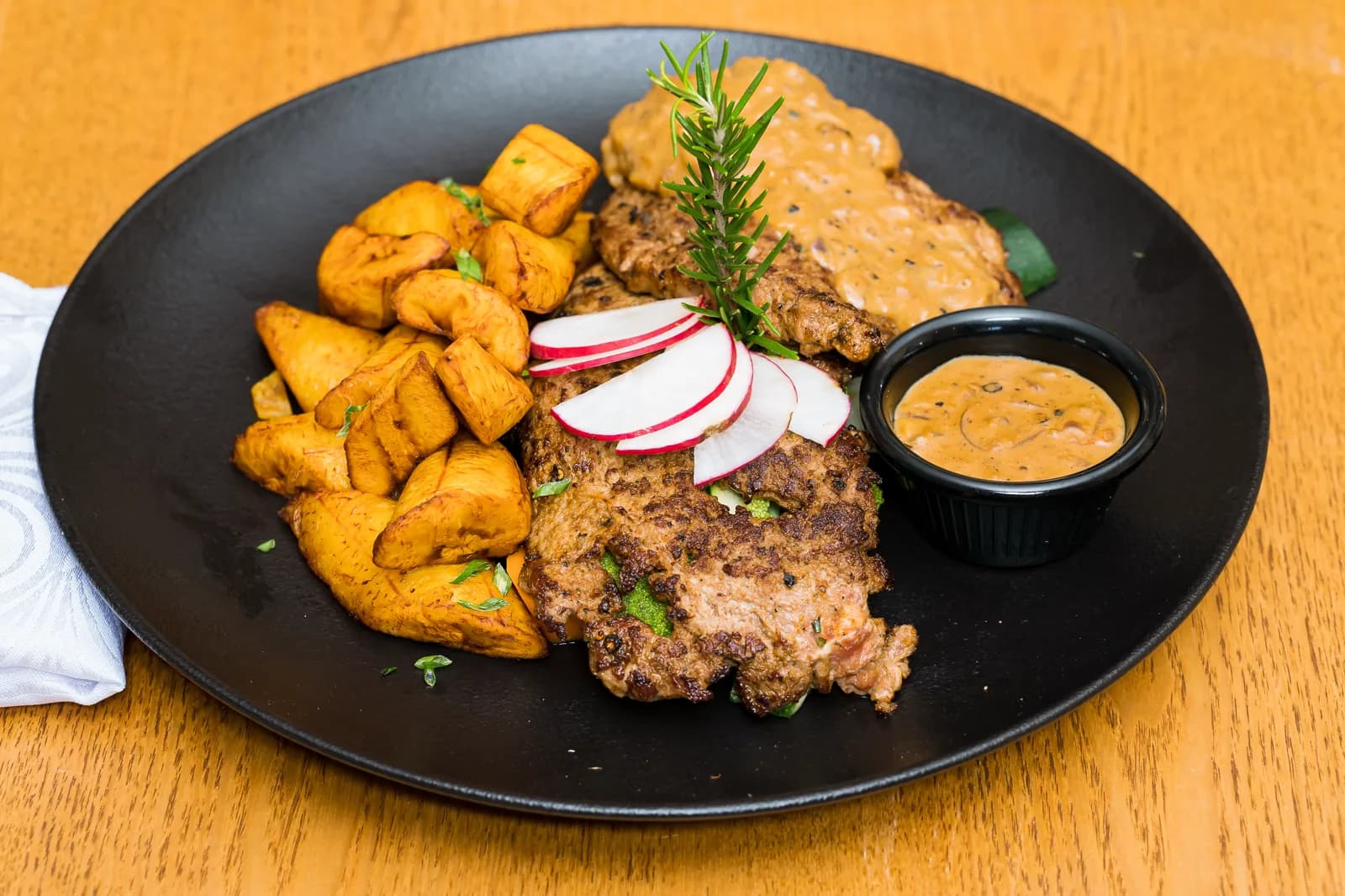
Lunch and dinner are à la carte from the same kitchen — grills, curries, pizza, pasta, salads, coffee and fresh juice — and room service will bring any dish up to the apartment. On a long stay, the pattern most guests settle into is restaurant lunches and room-service dinners.
Beyond the building, evening options in Kigo are good but finite. The resort next door has restaurants, Munyonyo is ten minutes away, and central Kampala's dining is 25 minutes if you want a night out with range to it.
For a longer stay, the stocked kitchen in a 2BHK Suite or the Penthouse changes the rhythm. Cooking two or three nights a week is what makes a month on the lakeside feel like living somewhere rather than staying somewhere.
What should you check before committing to a long lakeside stay?
Check the internet, the kitchen, the laundry and the commute, in that order. Those four decide whether a month on the shoreline is a pleasure or a slow irritation, and only the last one depends on your own diary.
- Connectivity, specifically. Ask whether the Wi-Fi is fibre and whether it covers the building as a mesh or one router per apartment. Fibre-optic mesh Wi-Fi throughout is the standard to hold out for, and it is what HMK Living runs.
- Kitchenette or full kitchen. This is the single most common mismatch between what a guest expected and what they booked. Confirm it in writing.
- What housekeeping covers, and how laundry works. Daily housekeeping and laundry as a service remove more friction from a long stay than any amenity. Apartments without either look cheaper and are not.
- Your real commute. If meetings are in Nakasero every weekday, the drive will accumulate. If your work is remote or you fly often, the airport proximity pays you back every week.
- Schooling, if children are coming. International schools cluster in central Kampala, so a daily school run from the shoreline is doable but adds real time in each direction.
- The discount structure. Stays of seven nights or more attract a 10 to 20% discount, and longer extended-stay rates exist. Ask before you book seven separate nights.
For one to three months, a serviced apartment in Kigo is the cleanest arrangement available on this shoreline. The extended-stay offers are built for exactly that window, and the pricing page carries the current rate card.
A note for anyone comparing the lakeside with the city: we have written the comparison out properly in Kigo against Nakasero, and the working-remotely case in work from Kampala.
How should you plan a first lakeside stay?
Give it at least three nights. One night on the shoreline gives you the geography and none of the rhythm, and the rhythm is the entire point of being here rather than in town.
A balanced first week, if you have one:
- Nights one to four in Kigo — a round on the championship course next door, an afternoon on the water, a treatment at the Wellness Sanctuary, and at least one evening with nothing scheduled.
- Night five in Entebbe — the Botanical Gardens in the morning, the bay in the afternoon.
- Nights six and seven back in Kigo or across in Munyonyo — a different stretch of the same lake, for contrast.
If you only have a long weekend, cut the Entebbe night rather than the empty evening. The shoreline reveals itself in the unscheduled hours, and the full list of options for the scheduled ones is in things to do near Kigo.
Is the Ugandan lakeside a good long-term bet?
It looks like a slow, deepening market rather than a boom. The inventory is small, the new builds have been curated rather than mass-produced, and the clusters are filling with longer stays instead of higher turnover.
That suits a particular traveller: the one who would rather have a quiet apartment, a lake, a golf course, a spa next door and an airport 20 km away than a lobby with a view of a roundabout. It suits them for a week, and it suits them better for a month.
The practical version of the thesis is simple. Pick Kigo for the balance between city and airport, book an apartment rather than a room, stay longer than you first planned, and let the concierge handle the moving parts. The rest of the shoreline is a twenty-minute drive in either direction when you want it.
Check availability on the reservations page, see what is on site on the facilities page, read the neighbourhood detail on the area guide, or start with the pillar guide to hotel accommodation in Kigo. Questions go to the WhatsApp concierge on +256 748 390 401 or the office line on +256 393 101 080.
Reserve your stay at HMK Living, Kigo.
A curated boutique apartment. Direct rates, real-time availability, and an agentic WhatsApp concierge that handles the rest.
Planning a trip? Read our guide to hotel accommodation in Kigo.
Hajrah is the founder of HMK Living and the architect of the project's quiet-luxury brief in Kigo, Kampala. She writes about luxury hospitality, residential design, and life on the lakeside.
Common questions about this topic.
Greater Kampala's northern Lake Victoria shoreline has three luxury clusters. Munyonyo is closest to central Kampala and has the most mature hospitality cluster; Kigo sits between Munyonyo and Entebbe and is the newest luxury district, anchored by the Lake Victoria championship golf resort; Entebbe is closest to the airport and holds the Botanical Gardens and the protected bay shoreline.